 Water Filter Finder
Compare
Aquasana SmartFlow vs APEC ROES-100: under-sink RO compared on certification, reduction scope, and price
Aquasana SmartFlow Reverse Osmosis and APEC ROES-100 are two under-sink RO systems with very different per-SKU certification profiles. Here's the verified comparison.
Aquasana SmartFlow vs APEC ROES-100
Two under-sink reverse osmosis systems, similar price brackets, both certified to NSF/ANSI 58. On the brand pages they look like close competitors. On the per-product cert databases, the gap is materially larger than the marketing implies. This page walks through the verified data and an honest decision framework.
The short version
Both systems carry NSF/ANSI 58 RO certification and lead-free-materials certification. The difference is the breadth of contaminants each product is documented to reduce — verified per SKU in the WQA Gold Seal database — not the brand-wide marketing claims.
| Aquasana SmartFlow RO | APEC ROES-100 | |
|---|---|---|
| Brand-direct price | $199.99 sale ($449.99 MSRP) | $239.95 |
| Amazon price (captured 2026-05-27) | — | $239.95 |
| WQA-listed certifications | NSF/ANSI 42, 53 (incl P473), 58, 401, CSA B483.1 | NSF/ANSI 58, NSF/ANSI/CAN 372 |
| NSF/ANSI 58 reductions documented (this SKU) | 13 (TDS, Lead, Arsenic V, Fluoride, Hexavalent Chromium, Trivalent Chromium, Barium, Cadmium, Copper, Radium 226/228, Selenium, Turbidity, Cyst) | 1 (TDS) |
| NSF/ANSI 53 lead reduction | Yes (also covers PFOS, PFOA, Cyst, MTBE, Mercury, Asbestos, VOC, Turbidity) | No NSF/ANSI 53 listing |
| NSF/ANSI 401 emerging contaminants | Yes (11 compounds incl Bisphenol A, Estrone, Ibuprofen) | No |
| Affiliate path | Aquasana via Rakuten (LinkShare) | APEC via Impact.com |
The headline: SmartFlow is the broader-cert system for ingestion-risk contaminants; ROES-100 is the leaner, lower-MSRP system whose per-SKU cert listing covers TDS reduction.
The cert-listing gap, explained honestly
If you look at APEC's marketing pages, you'll see the brand cites NSF/ANSI 58 certification with claims for arsenic, fluoride, hexavalent chromium, lead, radium, selenium, TDS, trivalent chromium, copper, cadmium, barium, and turbidity — 12 contaminants. That brand-wide claim is accurate at the company level: APEC has 12 NSF/ANSI 58 reductions documented across its WQA Gold Seal listings.
For ROES-100 specifically, our audit found the WQA listing documented TDS reduction under NSF/ANSI 58. Broader APEC reduction sets may apply to higher-tier APEC models (e.g., RO-Hi, RO-PH90) and should be verified per SKU in the WQA Gold Seal ROES-100 listing or the APEC brand-wide listing.
This isn't an APEC-specific issue. NSF and WQA list certifications per-SKU; brand-wide reduction claims aggregate across all SKUs the manufacturer has submitted. The same dynamic exists for Aquasana, iSpring, Brita, and others — verifying per-product is the only way to know exactly what a specific SKU carries.
For Aquasana SmartFlow, the per-product NSF/ANSI 58 listing documents 13 reductions (the brand-wide list mirrors the per-product list for this SKU, so the marketing matches what the cert covers). The brand-direct product page also names NSF/ANSI 42, 53, 401, and CSA B483.1 — and each of those resolves to a separate WQA listing for SmartFlow.
Where each product fits
Aquasana SmartFlow is the stronger fit when:
- Your concern is lead, PFAS, or a mix of ingestion-risk contaminants. SmartFlow carries NSF/ANSI 53 with lead, PFOS, PFOA, cyst, mercury, asbestos, MTBE, VOC, and turbidity reductions documented. ROES-100 does not appear in WQA's NSF/ANSI 53 listings.
- Your CCR shows arsenic, fluoride, hexavalent chromium, or radium. SmartFlow's NSF/ANSI 58 listing covers all of these. ROES-100's NSF/ANSI 58 listing covers TDS.
- You want emerging-contaminant coverage (pharmaceuticals, BPA, microplastics). SmartFlow carries NSF/ANSI 401 with 11 emerging-compound reductions. ROES-100 does not.
- You're shopping during an Aquasana sale. $199.99 sale undercuts ROES-100's $239.95 list price; without the sale ($449.99 MSRP) Aquasana is the premium option.
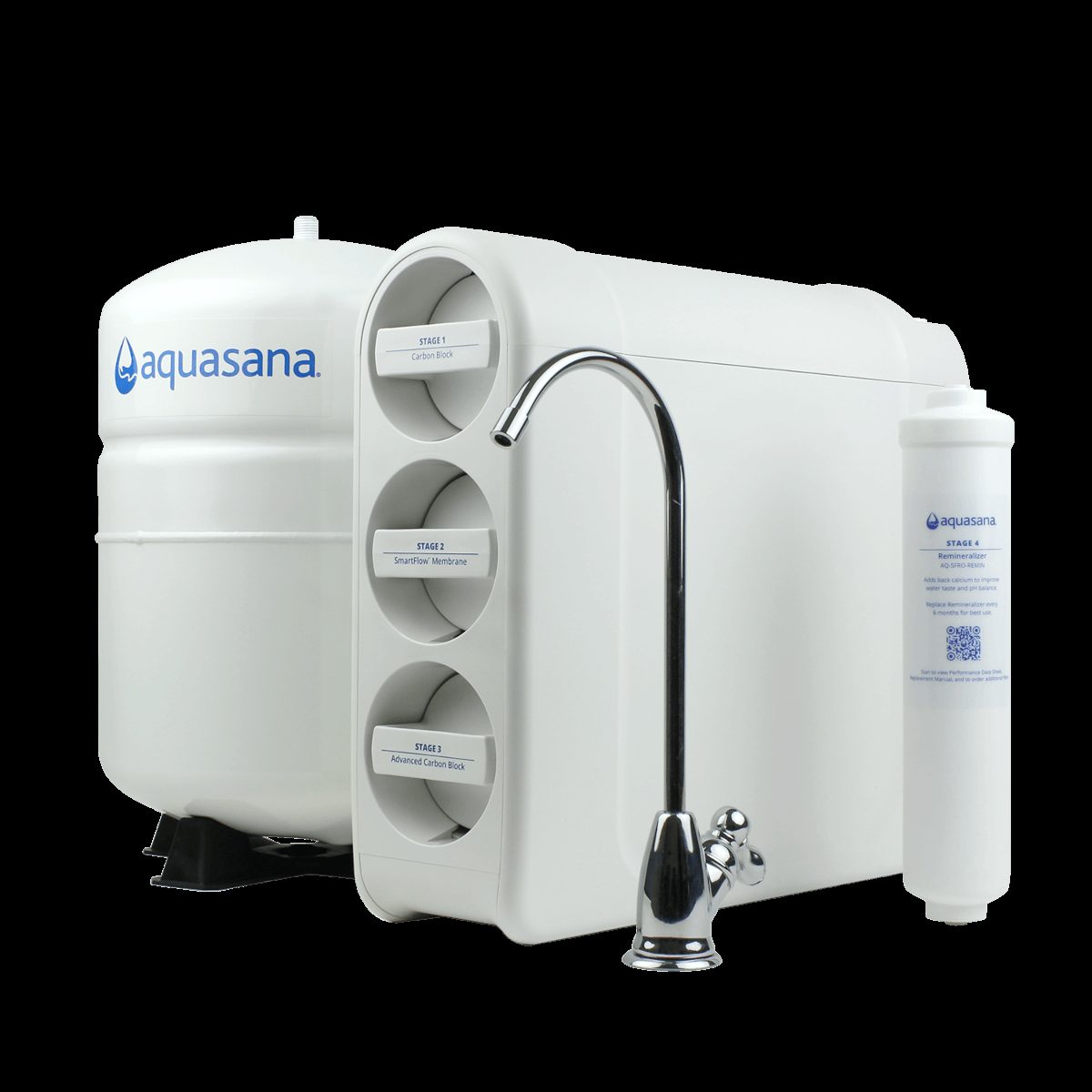
Aquasana SmartFlow Reverse Osmosis (AQ-SFRO2)
Installed under-sink RO
Price last checked during our buy audit; current price may differ. Affiliate links.
APEC ROES-100 is the right pick when:
- Your primary concern is general taste/TDS reduction at the kitchen tap and your CCR doesn't show specific high-stakes ingestion contaminants. NSF/ANSI 58 TDS reduction is what the per-SKU listing documents.
- You want the simplest 5-stage RO at a known fixed price. $239.95 at both Amazon and APEC direct, no MSRP/sale variability to navigate.
- You want APEC's longer track record. 25-year company history per the brand site, multiple NSF/ANSI 58 reductions documented across the broader APEC product line. The ROES-100 sits at the entry tier of that line; if you need broader contaminant coverage within APEC, look at the higher-tier APEC models (RO-Hi, RO-PH90) and verify their per-SKU listings.
- You want an entry-tier RO system for general water quality rather than broad contaminant-specific certification. ROES-100 at $239.95 is the simpler decision when you don't need the broader cert profile of SmartFlow.
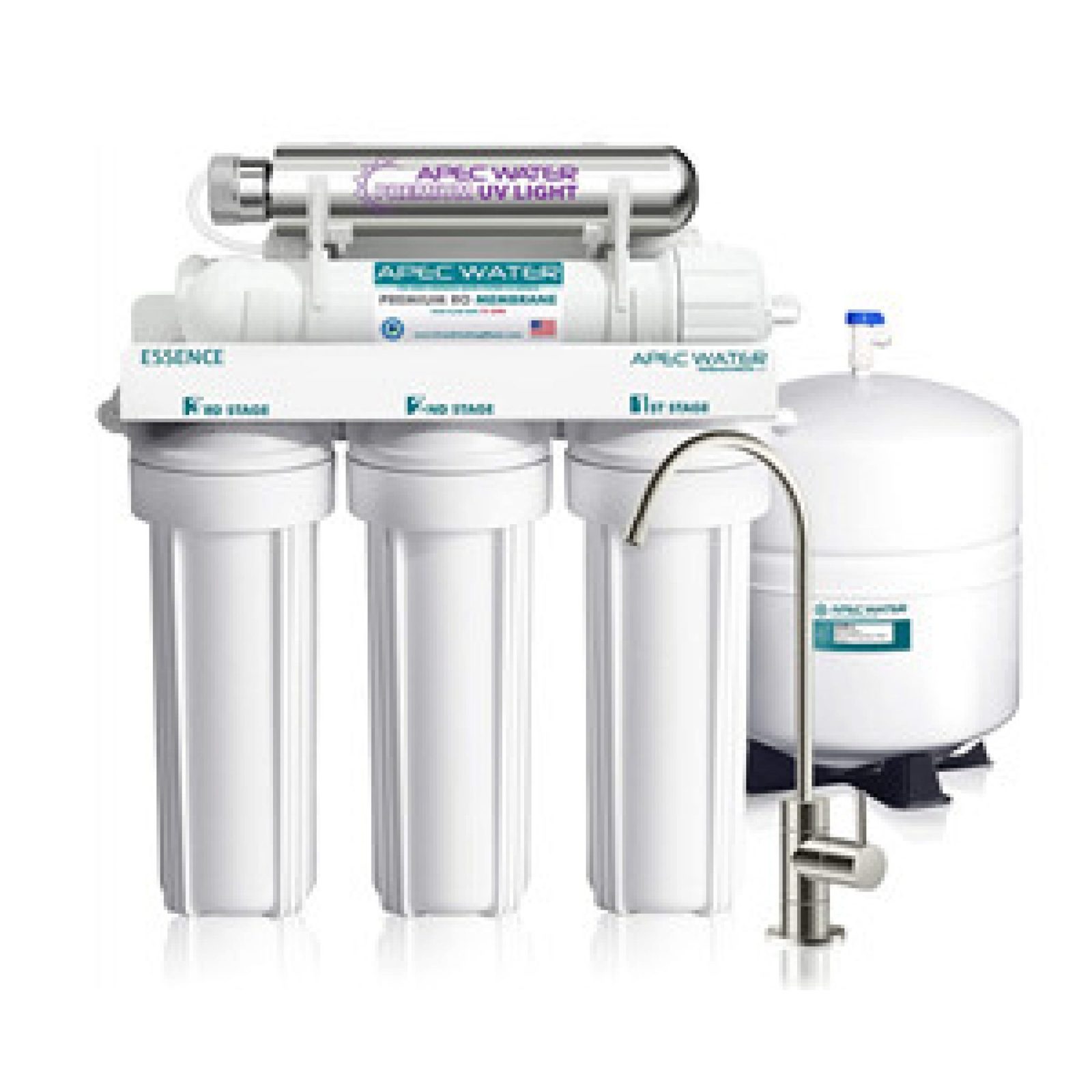
APEC ROES-100 5-Stage 100 GPD Reverse Osmosis (Essence)
Installed under-sink RO
Price last checked during our buy audit; current price may differ. Affiliate links.
What neither system is good at
A few situations where this comparison is the wrong frame:
- Hardness. Neither system softens water. Hardness needs a softener (NSF/ANSI 44) or salt-free conditioner (IAPMO scale-prevention), which is a whole-house point-of-entry installation.
- Shower/laundry/whole-home concerns. Both systems filter only the cold drinking water at the kitchen sink. If your concern includes shower chlorine or appliance protection, you need whole-house carbon — see whole-house vs under-sink. The honest combo for "lead in drinking + chlorine in shower" is whole-house carbon + under-sink RO, not RO alone.
- Throughput at a busy kitchen. Standard RO with a storage tank produces ~50-100 gallons per day with the tank as buffer. If you need instant high-flow filtered water across a large household, RO is throughput-limited regardless of which brand. Look at tankless RO (separate product class) for that case.
A note on iSpring
iSpring RCC7 is another popular under-sink RO that comes up alongside SmartFlow and ROES-100. Its base model is NSF DWTU-listed under NSF/ANSI 58 with TDS reduction (the Nanjing-facility variants RCC7-BLK / RCC7-BN add a 9-contaminant list to the cert scope, with separate productSlugs).
iSpring's affiliate model is a coupon-based referral (US-only, $100 minimum order, first-purchase only — not a standard cookie affiliate), which is a different consumer mechanic than Aquasana's LinkShare or APEC's Impact. We cover iSpring's broader cert + economics situation separately; for the SmartFlow vs ROES-100 comparison here, the honest framing is Aquasana vs APEC as direct competitors with comparable affiliate mechanics.
How we made these claims
Every cert claim on this page resolves to a specific listing we captured on 2026-05-27:
- SmartFlow's certifications come from Aquasana's product page combined with the WQA Aquasana brand search (NSF/ANSI 42, 53 incl P473, 58, 401, CSA B483.1 — five standards). We did not invent reductions; the lists above mirror what WQA documents for this SKU.
- ROES-100's certifications come from the per-SKU WQA listing (NSF/ANSI 58 TDS reduction, NSF/ANSI/CAN 372 lead-free materials). We did not extrapolate from APEC's brand-wide list.
- Prices are point-in-time captures from each brand's direct page and Amazon on 2026-05-27. Sale prices in particular shift; use the linked product pages for current pricing.
Read our methodology for how we make every recommendation. Read /certifications/nsf-53-vs-58-vs-401 for what each NSF/ANSI standard actually covers if these abbreviations are new.
Decision walkthrough
- Read your CCR. Look for lead, PFAS, fluoride, arsenic, hexavalent chromium specifically. (Use the Filter Finder if you'd rather walk through your inputs.)
- If any of those show up above EPA goals, SmartFlow is the verified-broadest answer in our covered set.
- If your CCR is clean of those and your concern is general taste/TDS, ROES-100 is the lower-investment answer.
- If neither feels like a fit (whole-home concerns, hardness, well water specialty needs), see whole-house vs under-sink or use the Filter Finder.
What this comparison deliberately doesn't do
- Doesn't say APEC is wrong or that Aquasana is universally better. APEC's brand-wide reductions accurately describe what's available across their RO product line; ROES-100 sits at the entry tier of that line with a narrower per-SKU cert profile. Higher-tier APEC SKUs may carry broader reductions — verify per model.
- Doesn't quote affiliate commission rates. Both programs are publisher-managed (Aquasana via Rakuten/PartnerCentric, APEC via Impact) and rate data is post-application. See our affiliate disclosure for the policy.
- Doesn't claim either system removes 100% of any contaminant. NSF/ANSI cert protocols document percentage reductions under specific test conditions; real-world reduction depends on influent concentration, flow rate, and filter age.
Next steps
- Want a personalized recommendation across the broader RO + under-sink set? Filter Finder.
- Comparing pitcher vs RO instead of two RO systems? Pitcher vs under-sink RO.
- Need to figure out what's in your water before shopping? How to read your water report.
- Understanding the cert standards in detail? NSF/ANSI 42 vs 53 vs 58 vs 401.